
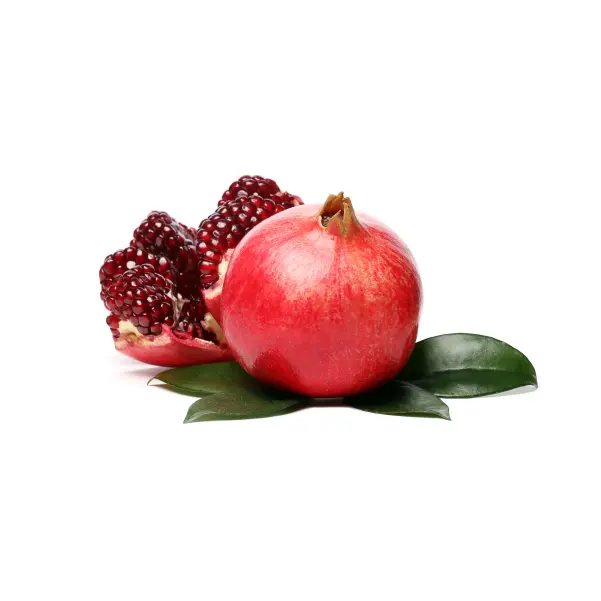
Pomegranates
Pomegranate is a fruit known for its sweet and slightly sour taste and for its richness of succulent seeds. Native to the Middle East and Western Asia, pomegranate is now grown in many warm and dry regions around the world.
The fruit is round and has a thick and hard skin of red or sometimes red-brown color. Inside, the pomegranate is divided into compartments by thin white membranes. Each compartment contains red and succulent seeds, called arils, which are the edible part of the fruit. These seeds have a sweet taste with a sour note and a crunchy texture, given by the core inside.
Pomegranates are often appreciated for their nutritional content. They are rich in antioxidants, in particular polyphenols such as tannins and ellagic acid, as well as containing vitamin C, vitamin K, folate and fiber. Their antioxidants have been associated with health benefits, including reducing inflammation and protecting against certain chronic diseases.
The consumption of pomegranate can be a little laborious, since it requires to break the peel and separate the arils from the membranes, but their unique flavor and health benefits make it worth it. Arilli can be eaten alone, added to salads, yogurt, desserts or used to make juices, syrups, and even wines.
Pomegranate is also a cultural and historical symbol in many traditions, often associated with health, fertility and abundance.