
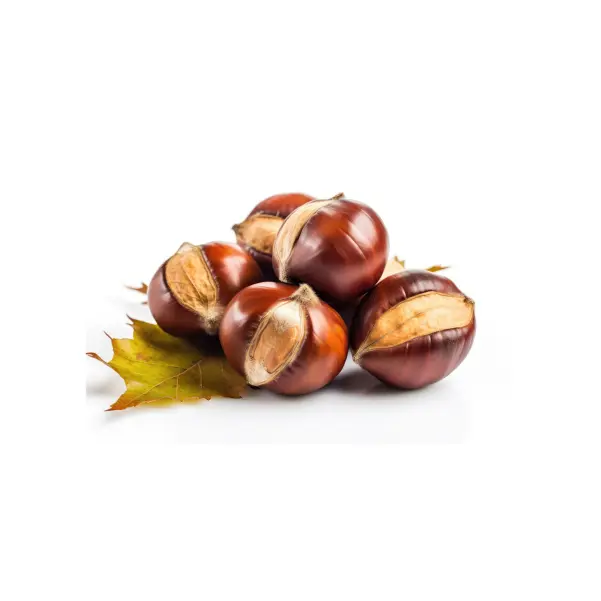
Chestnuts
Chestnuts are the fruit of the chestnut tree, known for its hard and thorny outer shell and soft and sweet internal pulp. These fruits are a traditional autumn food in many cultures, especially in Europe, Asia and parts of the United States.
Chestnuts are unique compared to other nuts because they have a high starch content and are low in fat. When they are raw, their texture is hard and floury, but once cooked, they become soft, sweet and slightly nutty. They can be roasted, boiled, grilled or processed into flour, used for bread, cakes and other baked goods.
Compared to other nuts, chestnuts are relatively low in protein and fat, but are a good source of complex carbohydrates, fiber, B vitamins, vitamin C (rare in nuts) and minerals such as potassium, iron and magnesium.
Chestnuts are often associated with memories of winter holidays, especially in Europe, where “roast chestnuts” (roasted chestnuts) are a common tradition in the city streets during the cold months. In addition to their culinary use, chestnuts also have cultural and historical value in many regions, having been an important food source for centuries.